
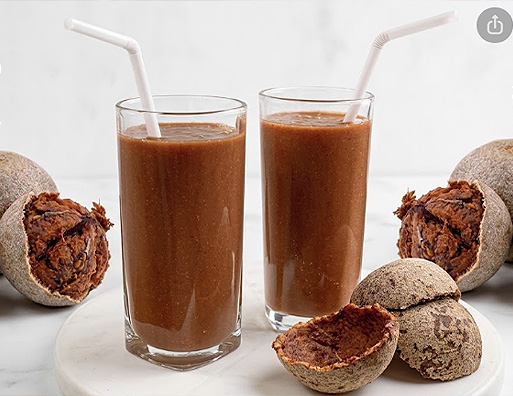
Wood Apple Juice
Cracking Open Nature’s Best Kept Secret (Creamy Divul Juice)
Wood apple fruit
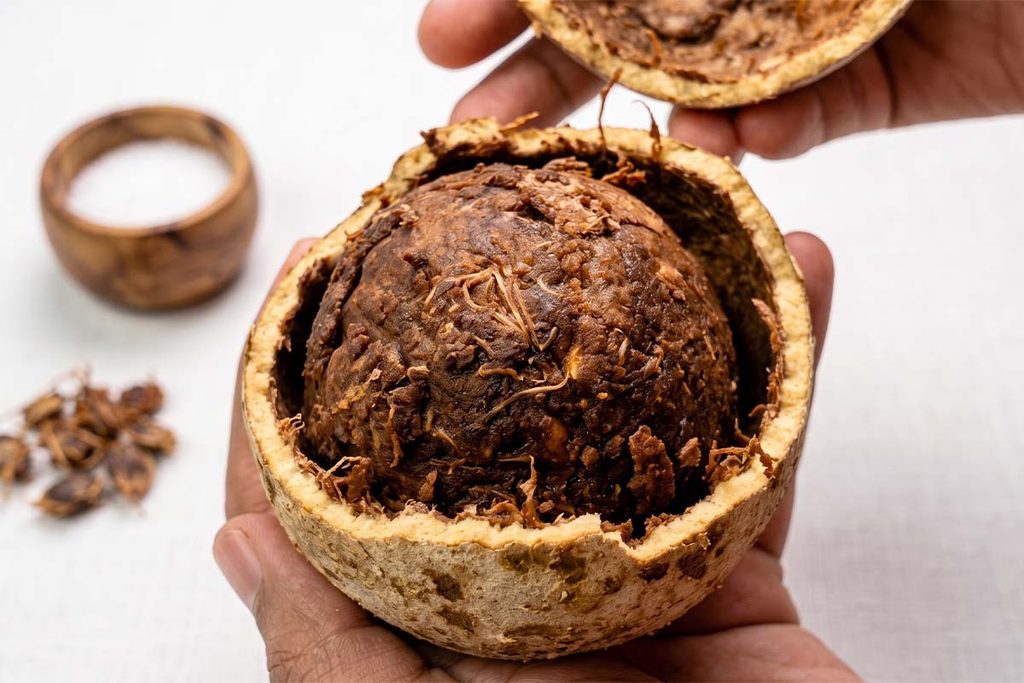
Wood apple (also known as Divul or Bael fruit) Imagine holding a heavy, petrified tennis ball. The exterior is a mottled, ash-grey rind that feels exactly like a smooth, dry river stone. There is no yielding, no soft spot, and no obvious stem to pull. It is Mother Nature’s most heavily armored ingredient, demanding a firm whack with a hammer or a pestle just to see what’s inside.
The shell splits open to reveal a dense, sticky, mahogany-brown pulp that looks more like a rustic, fibrous jam than a piece of fresh fruit.
Visually, it is a stylist’s dream. The dark, caramelized color of the pulp is threaded with pale, crunchy seeds and fine fibers, giving it a rich, complex texture. It doesn’t look juicy; it looks concentrated and intense, resembling a thick date paste or an aged tamarind chutney.
The aroma is wild, musky, and completely intoxicating. It smells like a collision between overripe tropical flora, sweet raisins, and funky blue cheese. It is a scent that promises something deeply complex.
And then, the taste. It is an absolute rollercoaster on the tongue. The first note is a sharp, mouth-puckering tangy, acidic and bright. But just as your eyes start to widen from the tartness, it mellows out into a deep, earthy, fermented sweetness. It tastes like a combination of sour plum, sweet tamarind, and molasses, all wrapped up in a slightly gritty, jammy texture.
It is loud, it is assertive, and it unapologetically commands your attention. It’s exactly the kind of bold ingredient that transforms a simple drink into an unforgettable, full-sensory experience.
How to Test for Ripeness?
1. The Aroma Test (The Most Reliable)
Hold the unbroken fruit up to your nose and take a deep breath.
Ripe: It will emit a strong, sweet, musky fragrance right through the woody shell.
Unripe: It will smell like absolutely nothing, or just faintly of dry wood.
2. The Drop/Bounce Test
This is the traditional method for testing ripeness. Hold the wood apple about 6 to 8 inches above a hard surface and drop it.
Ripe: It will bounce back up slightly, because the inside pulp has softened and detached slightly from the inner shell, creating a shock absorber.
Unripe: It will hit the ground with a harsh, solid, dead thud and will not bounce.
3. The Weight Test
Pick it up in your hand. A good, ripe wood apple should feel heavy for its size. If it feels unexpectedly light and hollow, it means the fruit is overripe and the pulp inside has dried out completely.
4. Visual Cues (The Least Reliable)
While smell and touch are best, you can look at the shell’s color. An unripe fruit is often greenish-grey. As it ripens, the shell turns a dull, dusty grey-brown, sometimes developing a slightly powdery, white-ish coating on the outside.
What You’ll Need (INGREDIENTS)
Wood apple – 05 to 06: Look for ones that smell highly fragrant and feel heavy for their size.
Salt – 1 tsp : The secret ingredient! A pinch of salt perfectly cuts through the tartness and elevates the sweetness.
Brown Sugar – ½ Cup: Gives a lovely, warm sweetness.
Jaggery (As per taste): Do not skip this if you can help it! Jaggery adds a deep, molasses-like richness that pairs beautifully with the fruit.
Coconut Milk – 200 ml: This is what turns our funky fruit pulp into a luxurious, creamy masterpiece.
Water – 150 ml: Just enough to thin it out to the perfect drinking consistency (plus a little extra for the straining process).
Step by Step Instructions : Let’s Get Cracking!
Step 1: Crack open The shell of a wood apple is literally woody. You can’t slice it with a knife. To crack it open, give it a firm tap with a rolling pin, a pestle, or even a clean hammer. You can also carefully whack it against a hard countertop. It will crack open, revealing a soft, sticky, deep brown pulp inside.
Step 2: The Big Scoop Grab a sturdy spoon and scoop out all that gorgeous brown pulp into a large mixing bowl. Scrape the insides of the shell to get every last bit of goodness. Don’t worry about the seeds right now; they are nestled right in the pulp, and we’ll deal with them later.
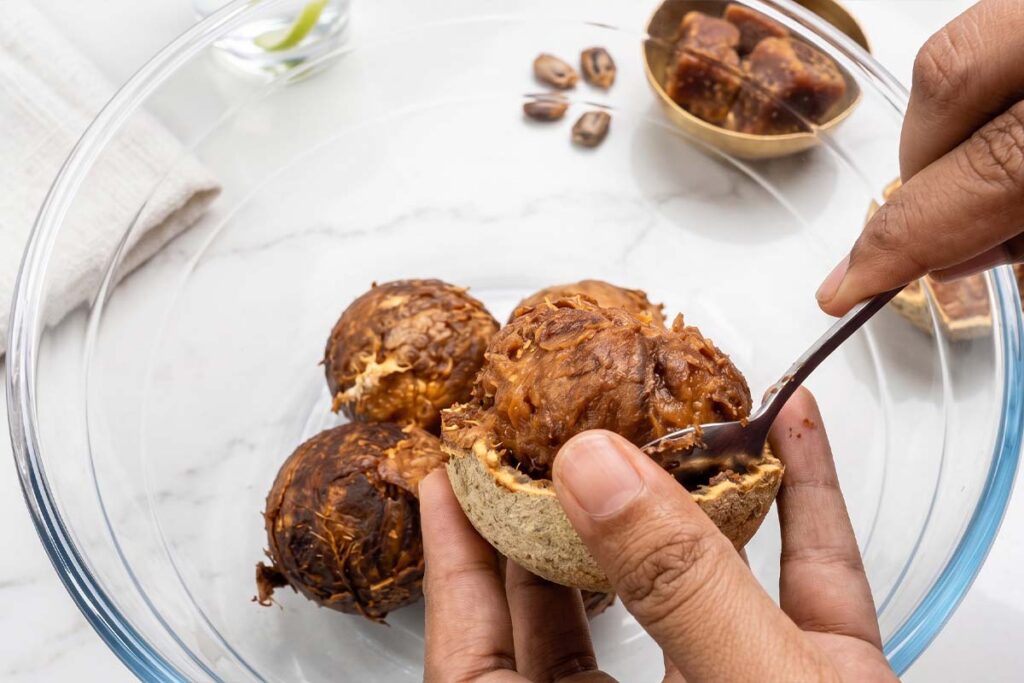
Step 2: The Big Scoop Grab a sturdy spoon and scoop out all that gorgeous brown pulp into a large mixing bowl. Scrape the insides of the shell to get every last bit of goodness. Don’t worry about the seeds right now; they are nestled right in the pulp, and we’ll deal with them later.
Step 3: Salt & Mash Sprinkle in your 1 teaspoon of salt. Using your spoon gently mash the pulp and salt together. The salt immediately starts working to balance the natural tartness of the fruit.
Step 4: Bring on the Sweetness Toss in your ½ cup of brown sugar, followed by your grated or crushed jaggery. (I usually start with about a quarter cup of jaggery and adjust later). Give everything a really vigorous mix until the sugars start to melt into the moisture of the fruit and it looks like a thick, sticky jam.
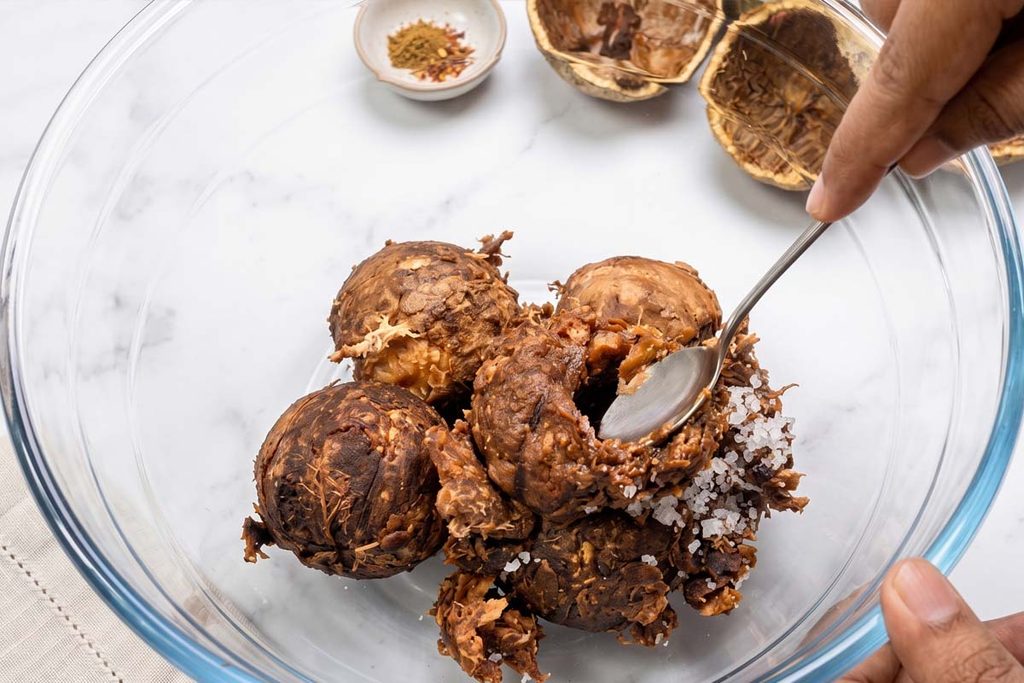
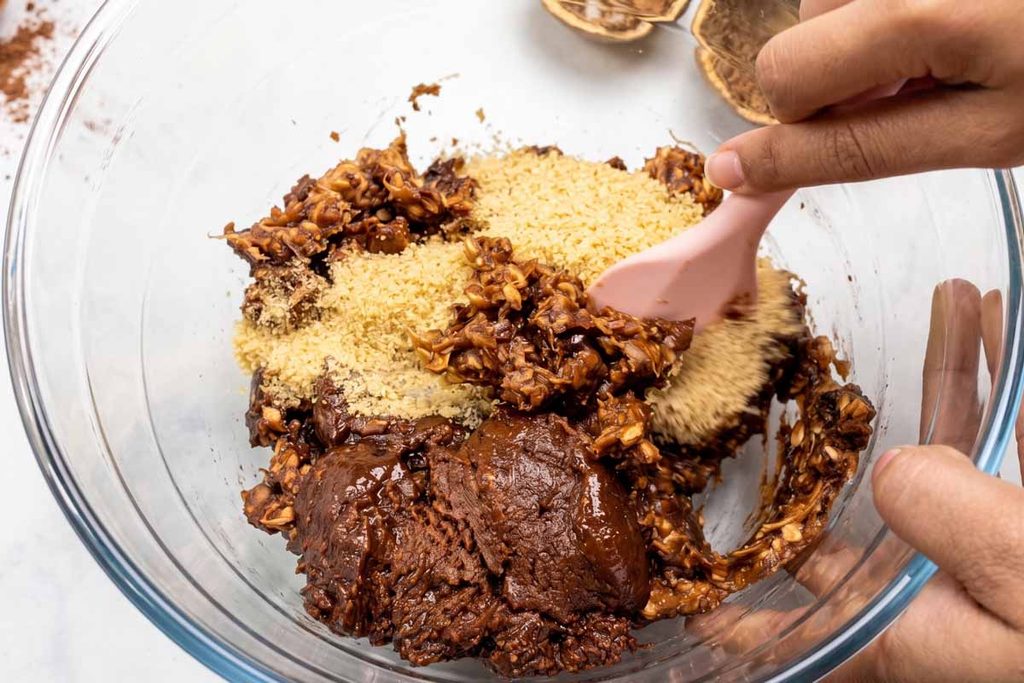
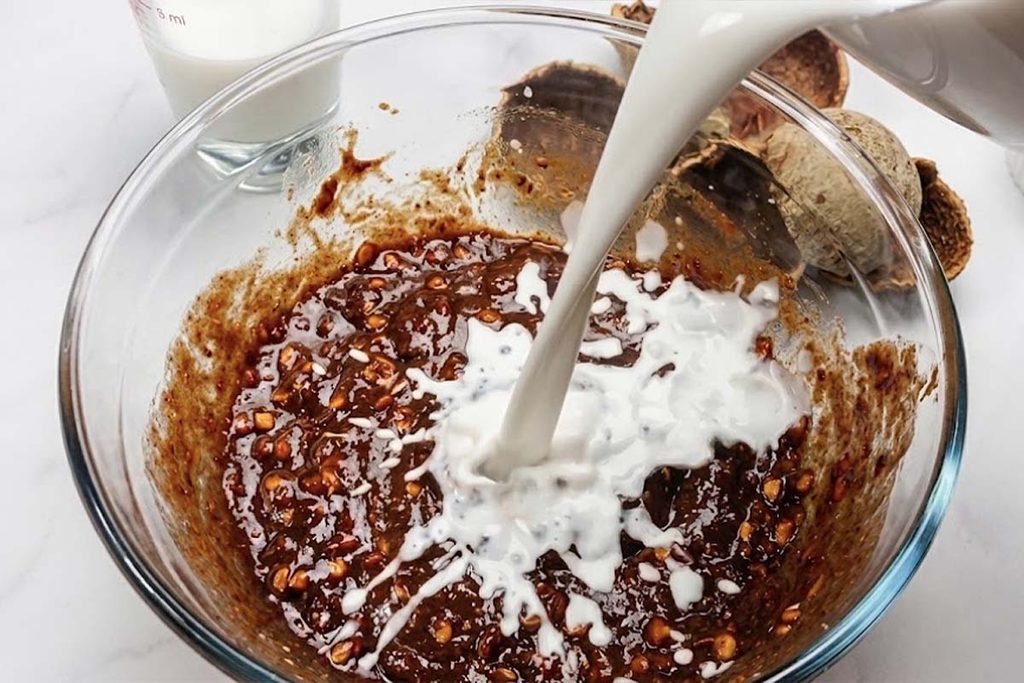
Step 5: The Coconut Cream Dream Pour in the 200ml of luscious coconut milk. Grab a whisk and whisk it beautifully. Watch as the dark brown pulp swirls together with the stark white coconut milk, turning into a gorgeous caramel-colored cream.
Step 6: Loosen it Up Add your 150ml of water and stir it well. The mixture will now look much more like a thick juice or a smoothie.

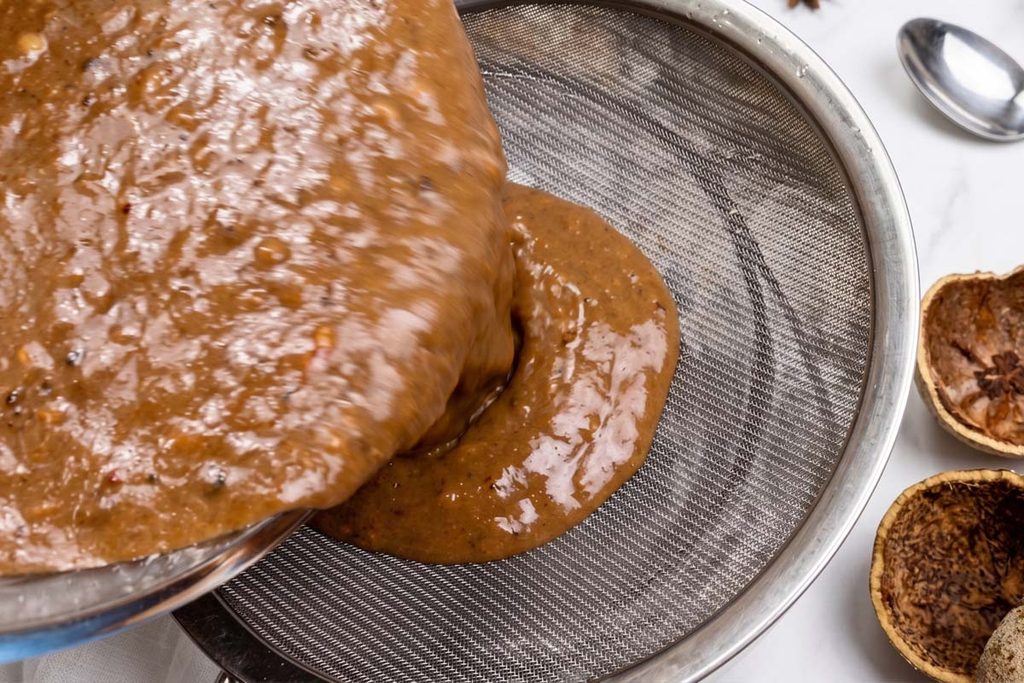
Step 7: The Great Strain (Crucial for Beginners!) Wood apples have tiny, crunchy seeds. While some people love the rustic crunch, we want a smooth, velvety drink today. Place a fine-mesh sieve over a large pitcher or jug, and pour your mixture through it. Pro-tip: Use the back of a ladle or spoon to push the liquid through the mesh. You really want to press it against the sieve to extract all the thick fruit puree, leaving only the dry seeds behind.
Step 7: The Great Strain (Crucial for Beginners!) Wood apples have tiny seeds. While some people love the rustic crunch, we want a smooth, velvety drink today. Place a fine mesh sieve and pour your mixture through it. Pro-tip: Use the back of a spoon to push through the mesh. You really want to press it against the sieve to extract all the puree, leaving only seeds behind.
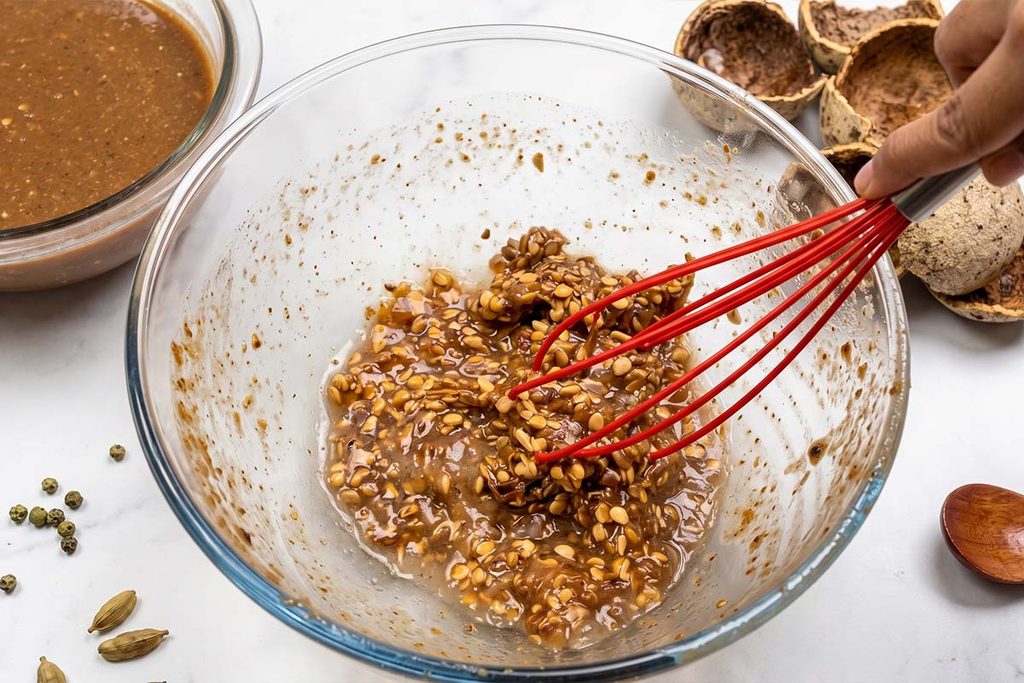
Step 8: Don’t Waste a Drop! Once you’ve strained the bulk of the juice, you’ll notice the seeds in the strainer still have a lot of sticky goodness clinging to them. Pour just a tiny splash of extra water over those remaining seeds right in the strainer. Give it one final stir and press to wash every last drop of flavor down into your pitcher.
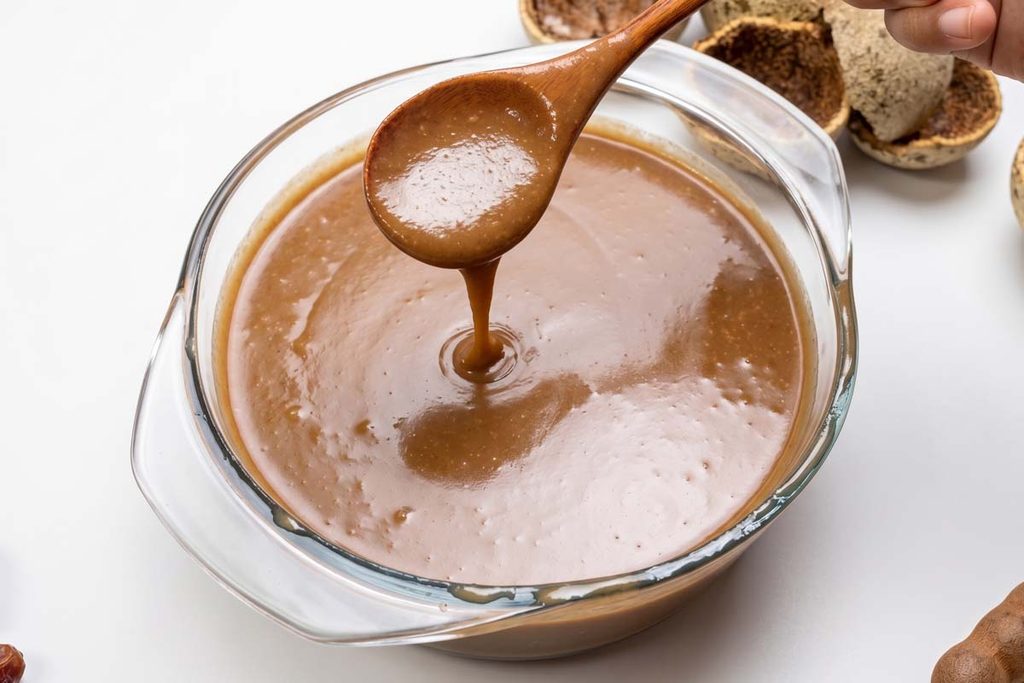
Step 9: The Taste Test This is the chef’s privilege! Give your gorgeous, creamy juice a stir and take a sip. Wood apples vary wildly in their natural sweetness and tartness. Does it need a bit more depth? Add a chunk of jaggery. A little more sweetness? A pinch more brown sugar. Adjust it until it makes your tastebuds dance.
How to Serve
This drink is at its absolute best when it is ice-cold. Pour it into a tall glass over a few ice cubes, stick a reusable straw in it, and prepare to be amazed by what you just created out of a fruit that looks like a rock.
Common mistakes to avoid
1) Using unripe or unpleasant tasting fruit;The drink may be excessive sour or bitter. Choose ripe, aromatic wood apple.
2)Adding too much sugar immediately; sweetness is easier to adjust gradually after blending.
3)Leaving shell fragments in the pulp ;look the pulp carefully when removing it from the hard shell.
4)Skipping the straining step;Excess seeds and fibers can make the texture unpleasant.
5)Adding too much water;Excess water can dilute the flavor. Start with recommended amount and adjust gradually.
6)Serve without stirring;The pulp may settle at the bottom of the jug, making the first and last glasses different in consistency.
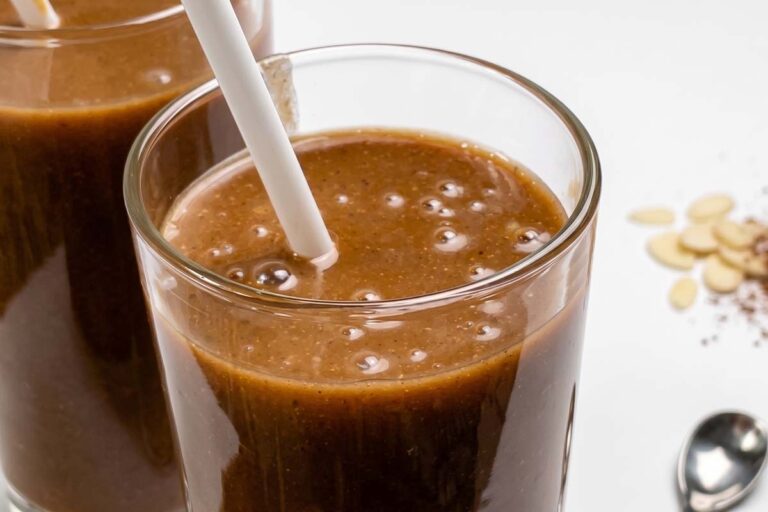
Creamy Wood Apple Juice
A refreshing, sweet, and tangy tropical drink blending the unique flavor of fresh wood apple with rich coconut milk and earthy jaggery. Perfect for beginners and best served ice-cold!
- Total Time: 15 minutes
Ingredients
- Wood Apples – 5 to 6 (ripe and fragrant)
- Salt – 1 tsp
- Brown Sugar – ½ Cup
- To Taste Jaggery (crushed or grated)
- Coconut Milk – 200 ml (thick and creamy)
- Water – 150 ml (plus a splash extra for straining)
Instructions
- Crack and Extractfirmly tap the hard shells with a until they crack open. Using a spoon, completely scoop out the soft, brown pulp into a large mixing bowl.
- Season and Mash Add the salt to the pulp. Using your spoon gently mash the mixture together. The salt will help balance the natural tartness of the fruit.
- Sweeten the PulpAdd the brown sugar and crushed jaggery. Mix vigorously until the sugars begin to melt into the fruit, creating a thick, sticky, jam like consistency.
- Make it Creamy Pour in the coconut milk. Whisk the mixture thoroughly until the dark pulp and white coconut milk combine into a smooth cream.
- Adjust Consistency Pour in the water and stir well to loosen the mixture into a drinkable, smoothie like consistency.
- Strain the Seeds Pour the mixture into the sieve,press the liquid through the mesh. Extract as much of the thick fruit puree as possible, leaving only the dry seeds behind.
- Extract the Remaining Flavor Pour a tiny splash of extra water directly over the leftover seeds in the strainer. Give it one final stir and press to wash the last bit of flavor down. Discard the seeds.
- Taste and Serve Give it a final stir and taste. Add more jaggery or brown sugar if you prefer a sweeter drink. Chill in the refrigerator for at least an hour, then serve over ice.
Notes
-
Sweetness Varies: Wood apples can range from very sweet to quite tart depending on their ripeness. Always start with a little less jaggery than you think you need, taste at the very end, and adjust accordingly!
-
Storage: This drink will keep well in the fridge for up to 2 days, though it is best enjoyed fresh. Shake well before pouring if separation occurs.
- Prep Time: 15 min